

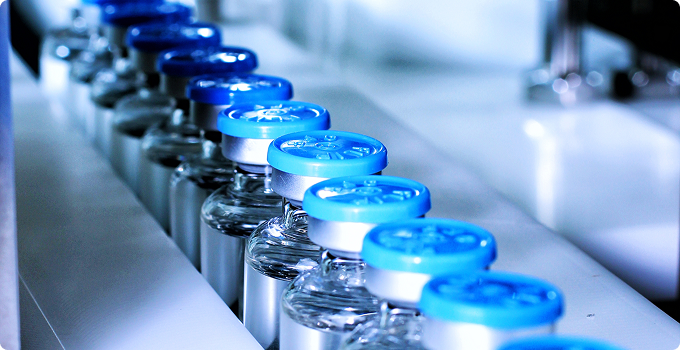
Visual Inspection in the Pharmaceuticals Industry
Seeing is believing
Visual Inspection Serves a Dual Purpose
Visual Inspectionis a critical quality control process in pharmaceutical manufacturing, particularly for sterile injectable products. It ensures that products are practically free from visible particles and container defects. It serves a dual purpose in ensuring product saftey and to demonstrate process control.
Although automation is increasingly adopted, human inspection remains a fundamental part of the visual inspection process.
Historical Context and the Need for Standardization
Manual visual inspection has been practiced for decades, but its subjectivity presents a challenge. Variability between inspectors and inconsistencies in technique have historically led to unreproducible outcomes. While early research by Knapp and colleagues introduced statistical methods for assessing inspection reliability, much of the industry's best practices have remained informal and expert-driven. Regulatory guidance—particularly from the USP <790>, <1790>, and the European Pharmacopoeia Chapter 2.9.20—has evolved to offer clearer expectations, but implementation details are still largely left to manufacturers.
This gap underlines the importance of standardized procedures, inspector training, and environmental control to ensure repeatable inspection performance.
Inspector Training, Environment & Standard Operating Procedures
Efficient visual inspection depends on qualified personnel and a well-defined process. Inspectors must undergo rigorous training to develop the ability to detect a broad range of defects, such as particulate matter, fibers, or cracks. Qualification includes not only visual acuity testing (per EP and USP guidance) but also practical skill assessment using challenge test sets. Continuous performance monitoring and periodic requalification help maintain high inspection standards.
Equally important is the use of a controlled inspection environment. While specifics such as lighting levels, background contrast, or inspection timing can vary, they typically follow the principles outlined in USP and EP chapters. Inspection conditions must be reproducible and minimize operator fatigue, distraction, or external variability. Inspection procedures should define container handling, defect classification, and acceptance criteria in a way that ensures consistency.
Video description/title here
Use of Visual Inspection Test Sets
Visual Inspection test sets—test samples with known defects and defect free samples—are used to train and qualify inspector performance and ensure the reliability of manual inspections. These sets serve as a benchmark to qualify and routinely assess inspectors. Ongoing performance tracking, including statistical analysis of false positive and false negative rates, supports continuous improvement of inspection outcomes. They are also essential for the qualification and validation of automated visual inspection machines, where manual visual inspection provides the baseline to assess machine performance.
Visual Inspection in the Pharmaceutical Industry
- Establishing standardized reference sets for inspector training and qualification
- Ensuring product-specific particle risks are realistically represented
- Validating manual and automated inspection systems for regulatory compliance
- Supporting long-term performance through regular requalification
- Reducing inspection errors and safeguarding patient safety
Visible Particle Identification in Pharma
- Meeting global regulatory expectations for visible particle control
- Identifying particle origins from equipment, packaging, proteins, or environment
- Applying advanced analytical methods (FTIR, SEM/EDX, LIBS) for root-cause analysis
- Ensuring rapid turnaround of investigations to support batch release
- Building holistic control strategies to protect product integrity and patients
The Need for a Holistic Visual Inspection Control Strategy
Visual inspection is guided by regulatory expectations and industry best practices. By adhering to pharmacopoeial guidance (USP <790>/<1790> and EP 2.9.20), implementing robust training programs, and maintaining a standardized inspection process, pharmaceutical companies can achieve high levels of inspection consistency and product quality. Visual inspection remains a vital process in ensuring the safety of sterile drug products and demonstrating manufacturing process control.
Technical bulletins on visual inspection, particle control and polysorbate degradation
Conclusion: Quiet Power, Big Impact
Spectroscopy may not be flashy. It doesn’t make headlines or dominate boardroom discussions. But behind the scenes, it’s transforming how pharmaceutical products are developed, manufactured, and approved.
By delivering fast, accurate, and non-destructive analysis, spectroscopy empowers pharma companies to meet rising regulatory demands, streamline their workflows, and ultimately bring better medicines to patients — faster and safer than ever before.
In the race for efficiency and compliance, spectroscopy isn’t just keeping up. It’s leading the way.
Scientific Precision
Real-World Impact

Meet the people behind Clear Solutions Labs – where advanced analytics meets pharmaceutical innovation.
At Clear Solutions Labs, science meets purpose. Our team of experts delivers customized analytical solutions to support pharmaceutical companies in research, development, and quality control. Whether it’s complex formulation testing, spectroscopic data analysis, or regulatory compliance support, we bring clarity to complexity.